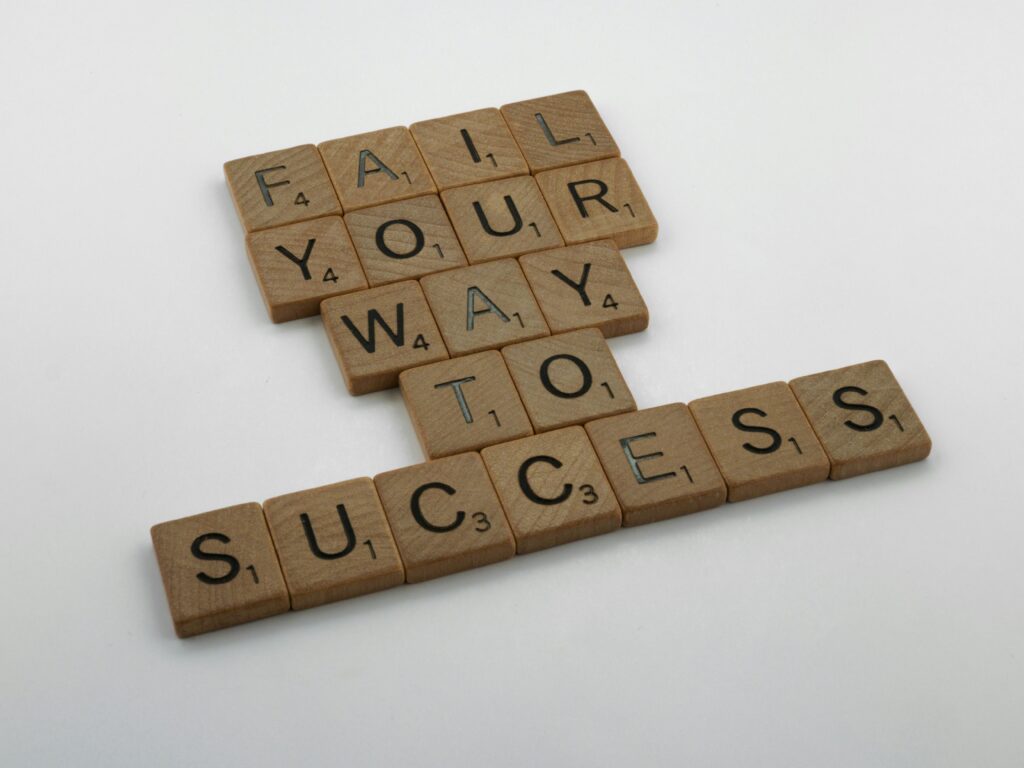
I’ve missed more than 9000 shots in my career. I’ve lost almost 300 games. 26 times, I’ve been trusted to take the game winning shot and missed. I’ve failed over and over and over again in my life. And that is why I succeed. -Michael Jordan
Is relapse in sobriety a failure, or is it simply a part of the journey? In my view, it’s most often the latter. Our attitude and perception of relapse are more significant than the event itself. It’s time to shift our understanding of what relapse means in the context of sobriety. This article will provide you with the tools to transform your perception and approach to relapse.
The myth of failure
Is there such a thing as failure? If we can learn something from an experience, can it truly be considered a failure, or is it more accurately described as a lesson? This is particularly relevant when discussing relapse in sobriety. Each relapse presents an opportunity for education. What we often label as failures are, in fact, valuable insights that help us collect new information about ourselves and our behaviors.
The meaning we assign to these events greatly influences our emotional responses. Viewing relapse as a failure leads to negative emotions, while perceiving it as a learning experience creates a sense of purpose. When we recognize that every relapse serves as a stepping stone on our journey, it becomes easier to accept and integrate these occurrences into our recovery narrative.
Instead of seeing relapse as the end of our journey, we can view it as the beginning of a new chapter. Ask yourself: What did I experience prior to the relapse? What were my thoughts and emotions? What triggered those feelings? Reflecting on these questions allows you to analyze and gather information that can inform your future choices.
Additionally, it’s important to recognize the role of negativity bias in how we perceive these experiences. Our brains are wired to focus on dangers and negatives, which often leads us to overemphasize shortcomings. Becoming aware of this bias enables us to consciously shift our focus toward the positive aspects of our situations.
Lastly, when you experience a relapse, resist the urge to judge yourself. Accept it for what it is. Remember that judgment leads to shame, and shame is a powerful emotion that can perpetuate addictive behaviors. Recognizing this dynamic is crucial for your recovery.
New strategies
What’s the worst thing that can happen after a relapse? Simply repeating the behavior the next day. That’s why it’s crucial to learn how to break the cycle and prevent a relapse from becoming a habit. A single relapse can be a valuable learning experience, but if it turns into weeks or months of setbacks, it loses its beneficial potential.
One effective way to break the cycle is to have a plan in place for what to do if you relapse. Preparing in advance means you won’t be left wondering how to respond when it happens. Consider strategies like reaching out to a friend, attending an AA meeting, practicing meditation, or reading inspirational quotes. Engaging in physical activities, such as going for a long walk or exercising, can also help you regain focus. Additionally, praying for support or enjoying a meal with positive company can provide the encouragement you need.
Ask yourself: What methods help you get back on track? Creating a supportive system to guide you can transform relapses into valuable lessons. Often, relapses are perceived as failures, particularly when they lead to extended periods of substance use. However, if you have a system to help stabilize your path, those relapses become manageable setbacks rather than insurmountable obstacles. Remember, every experience is an opportunity for growth. If you can learn something from each event, it becomes a stepping stone in your recovery journey.
Conclusion
How do you view relapses now? Are they enemies or opportunities? I hope you can start to see them as friends on your journey toward sobriety. The real issue isn’t the relapse itself; it’s our limiting mindset toward these setbacks that creates the biggest challenges. If we can learn something valuable from each relapse, then it becomes an opportunity for education rather than a failure. Remember, you didn’t fail; you simply discovered one way that doesn’t work.
The key is to establish a system for how to respond when a relapse occurs. With the right system in place, you can ensure that a relapse remains just that—a single incident rather than a series of setbacks. Use each experience to gather insights that will inform your future decisions and actions.
The purpose of this article is to help you recognize that relapses can be valuable learning experiences rather than signs of defeat. In many addiction circles, relapses are viewed as the end of the journey, but I encourage you to create meaning from your relapses and see them as stepping stones toward lasting sobriety.